Negative life events and the risk of depression: Findings from Indonesia Family Life Survey 2014/2015

Negative life experiences are well-established risk factors for mental health problems, yet evidence from low- and middle-income countries remains limited. Many studies also overlook area-level factors that may influence these relationships. This study aimed to examine the association between negative life events and depression among individuals in Indonesia, accounting for both individual and area-level characteristics. […]
Determinants of Smoking Relapse Among Indonesian Children: A National Cross-sectional Analysis Using Global Youth Tobacco Surveillance Data

This study aimed to identify the determinants associated with 4 smoking trajectories (never smoking, current smoking, consistently quitting smoking, and smoking relapse) among Indonesian children using pooled national data. This study analyzed children’s smoking trajectories using pooled data from the Indonesian Global Youth Tobacco Survey (2006, 2009, 2014, and 2019). Multinomial logistic regression was applied […]
Reducing the Prevalence of Smoking Among Street Children to Maintain the Sustainability of a Healthy City in the Urban Area of Jakarta, Indonesia

Street children in urban community need protection against several risk factors easily affecting them, one of which is smoking habit. Interventions targeting their smoking habits will improve public health and healthy social life to maintain the sustainability of a healthy city. This study aims to provide an overview and evidence of street children’s condition as […]
Determinants of healthcare utilization under the Indonesian national health insurance system – a cross‐sectional study

Health equity is defined by the World Health Organization (WHO) as the fair opportunity for everyone to attain their full health potential regardless of demographic, social, economic or geographic strata. It aligns with the guiding principle of “leaving no one behind”, central to the 2030 Agenda for Sustainable Development adopted by the United Nations (UN) […]
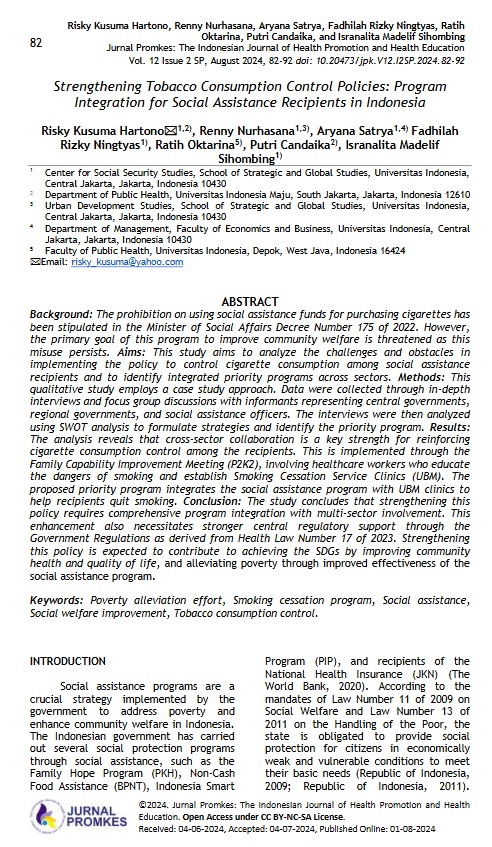
Strengthening Tobacco Consumption Control Policies: Program Integration for Social Assistance Recipients in Indonesia

The prohibition on using social assistance funds for purchasing cigarettes has been stipulated in the Minister of Social Affairs Decree Number 175 of 2022. However, the primary goal of this program to improve community welfare is threatened as this misuse persists. This study aims to analyze the challenges and obstacles in implementing the policy to […]
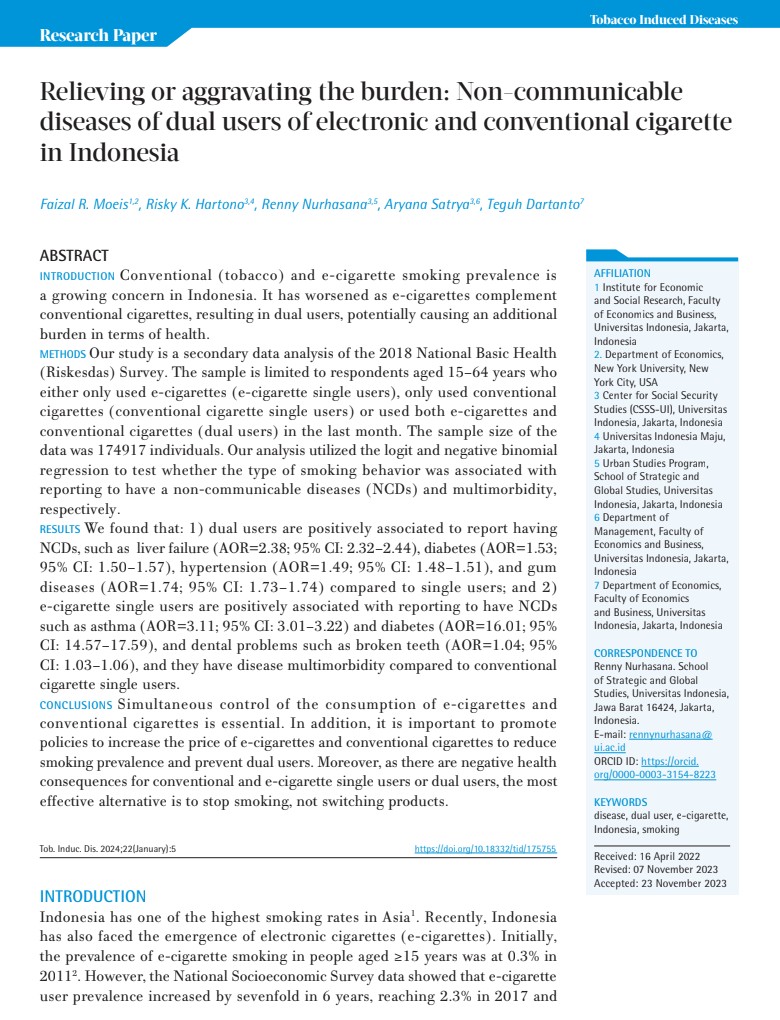
Relieving or aggravating the burden: Non-communicable diseases of dual users of electronic and conventional cigarette in Indonesia

INTRODUCTION Conventional (tobacco) and e-cigarette smoking prevalence is a growing concern in Indonesia. It has worsened as e-cigarettes complement conventional cigarettes, resulting in dual users, potentially causing an additional burden in terms of health. METHODS Our study is a secondary data analysis of the 2018 National Basic Health (Riskesdas) Survey. The sample is limited to […]
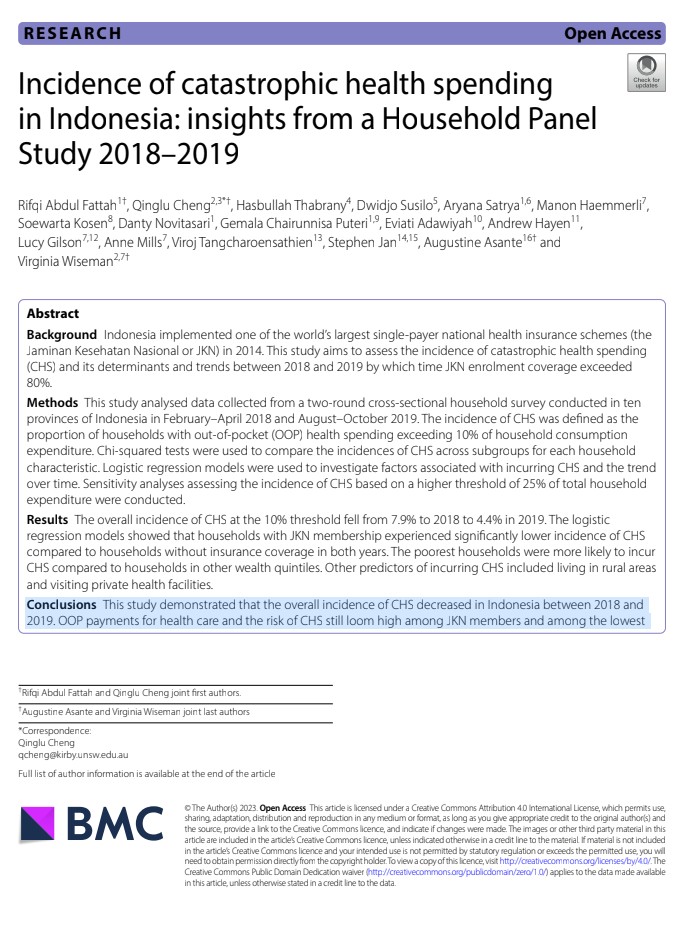
Incidence of catastrophic health spendingin Indonesia: insights from a Household Panel Study 2018–2019

Background Indonesia implemented one of the world’s largest single-payer national health insurance schemes (the Jaminan Kesehatan Nasional or JKN) in 2014. This study aims to assess the incidence of catastrophic health spending (CHS) and its determinants and trends between 2018 and 2019 by which time JKN enrolment coverage exceeded 80%. Methods This study analysed data […]
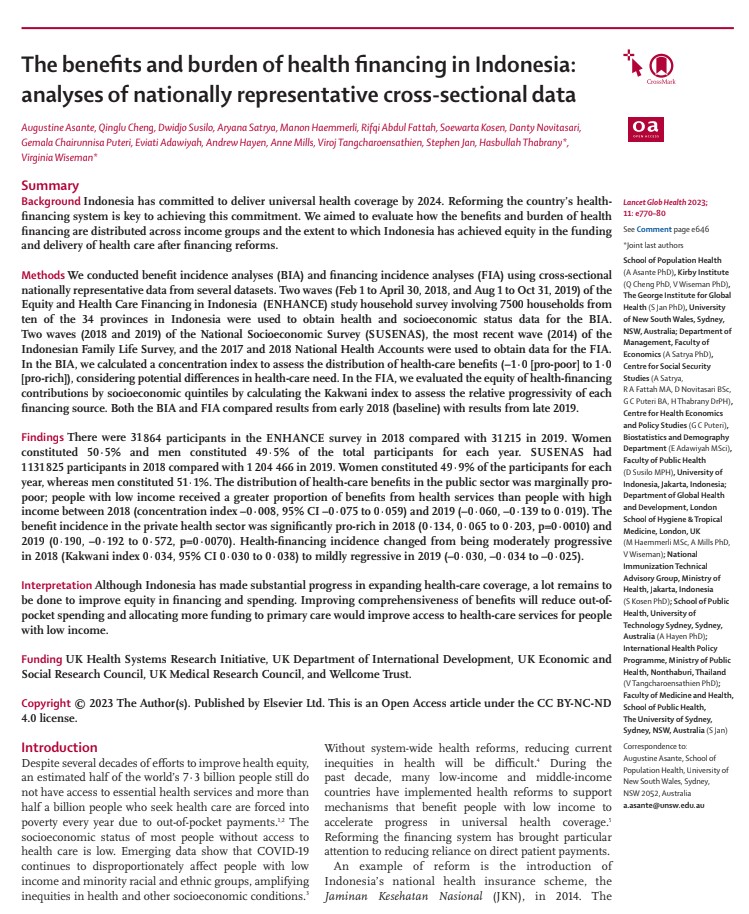
The benefits and burden of health financing in Indonesia: analyses of nationally representative cross-sectional data

Indonesia has committed to deliver universal health coverage by 2024. Reforming the country’s health financing system is key to achieving this commitment. We aimed to evaluate how the benefits and burden of health financing are distributed across income groups and the extent to which Indonesia has achieved equity in the funding and delivery of health […]
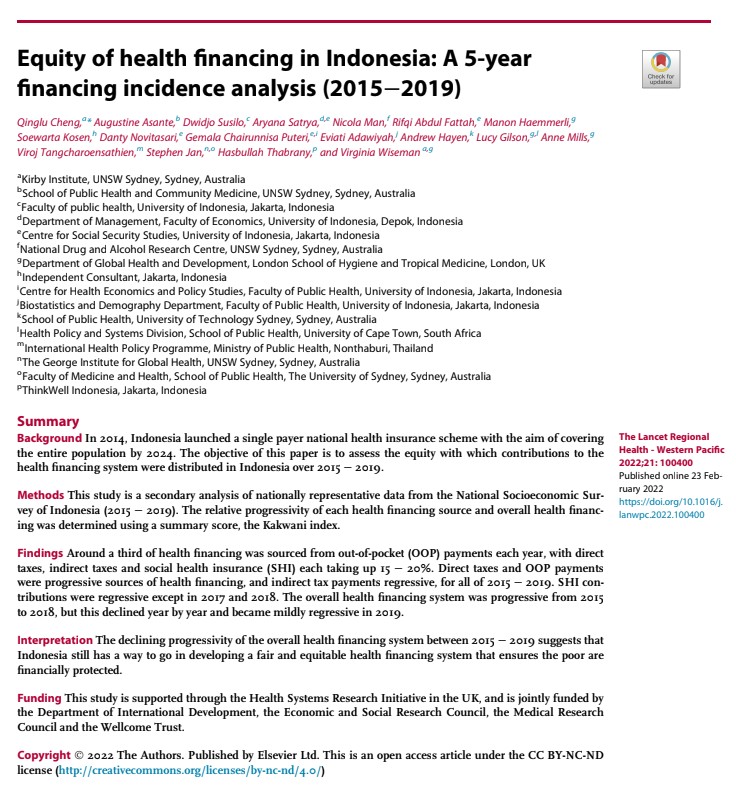
Equity of health financing in Indonesia: A 5-year financing incidence analysis (2015−2019)

Moving towards Universal Health Coverage (UHC) requires a sustainable and equitable health financing system. Health financing should not only seek to raise sufficient funds and use them efficiently but do so in an equitable manner.1 There is a consensus among policymakers and health financing experts that payment for health care should be based on ability […]
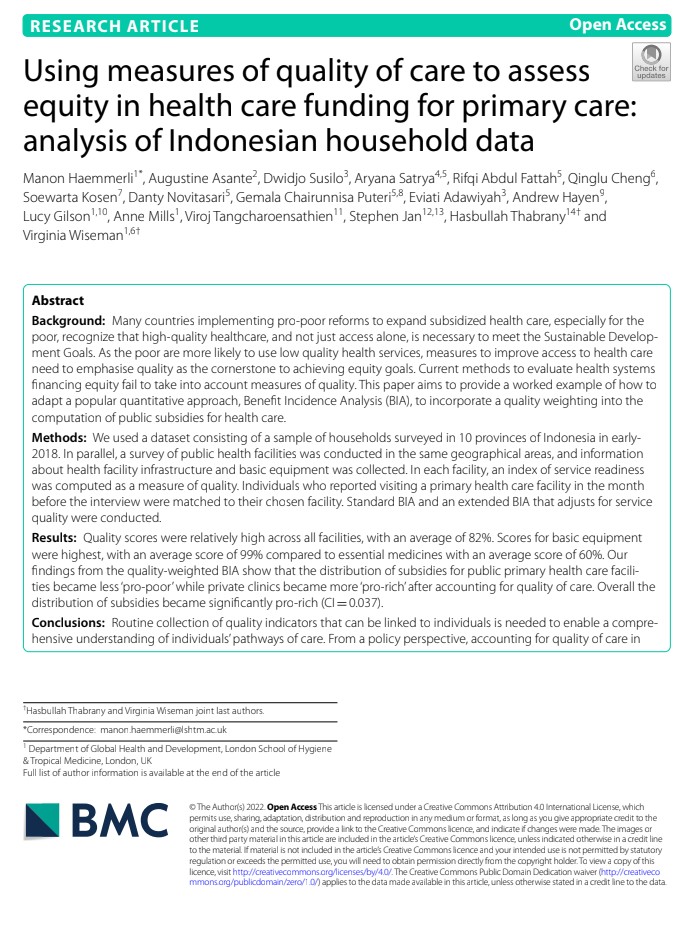
Using measures of quality of care to assess equity in health care funding for primary care: analysis of Indonesian household data

Many countries implementing pro-poor reforms to expand subsidized health care, especially for the poor, recognize that high-quality healthcare, and not just access alone, is necessary to meet the Sustainable Development Goals. As the poor are more likely to use low quality health services, measures to improve access to health care need to emphasise quality as […]