
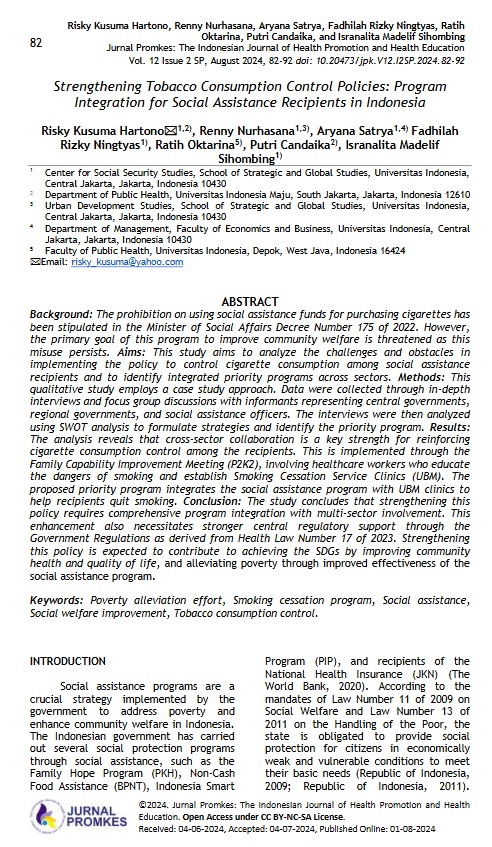
The prohibition on using social assistance funds for purchasing cigarettes has been stipulated in the Minister of Social Affairs Decree Number 175 of 2022. However, the primary goal of this program to improve community welfare is threatened as this misuse persists. This study aims to analyze the challenges and obstacles in implementing the policy to control cigarette consumption among social assistance recipients and to identify integrated priority programs across sectors.
The analysis reveals that cross-sector collaboration is a key strength for reinforcing cigarette consumption control among the recipients. This is implemented through the Family Capability Improvement Meeting (P2K2), involving healthcare workers who educate the dangers of smoking and establish Smoking Cessation Service Clinics (UBM). The proposed priority program integrates the social assistance program with UBM clinics to help recipients quit smoking.