Health equity is defined by the World Health Organization (WHO) as the fair opportunity for everyone to attain their full health potential regardless of demographic, social, economic or geographic strata. . . .
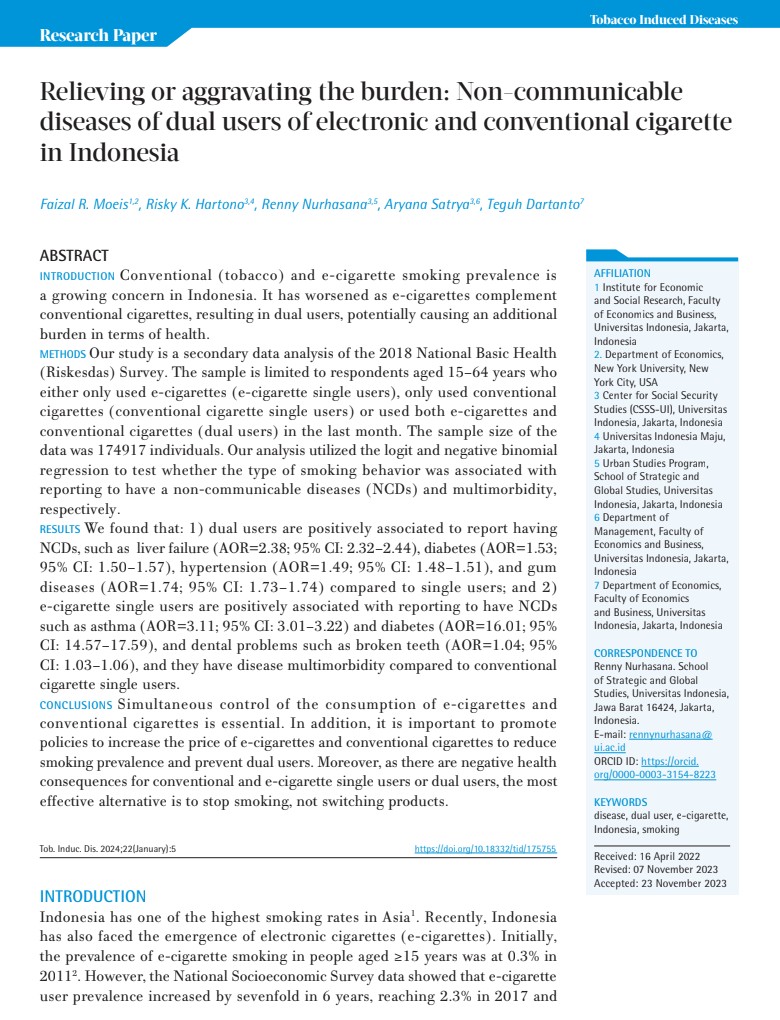
INTRODUCTION Conventional (tobacco) and e-cigarette smoking prevalence is a growing concern in Indonesia. It has worsened as e-cigarettes complement conventional cigarettes, resulting in dual users, potentially causing an additional burden . . .
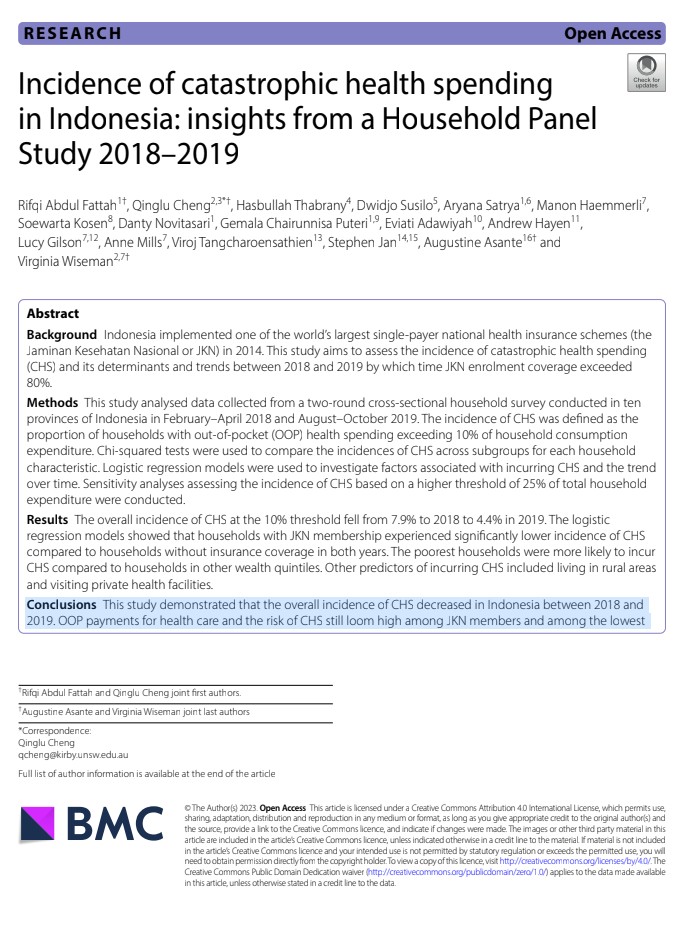
Background Indonesia implemented one of the world’s largest single-payer national health insurance schemes (the Jaminan Kesehatan Nasional or JKN) in 2014. This study aims to assess the incidence of catastrophic . . .
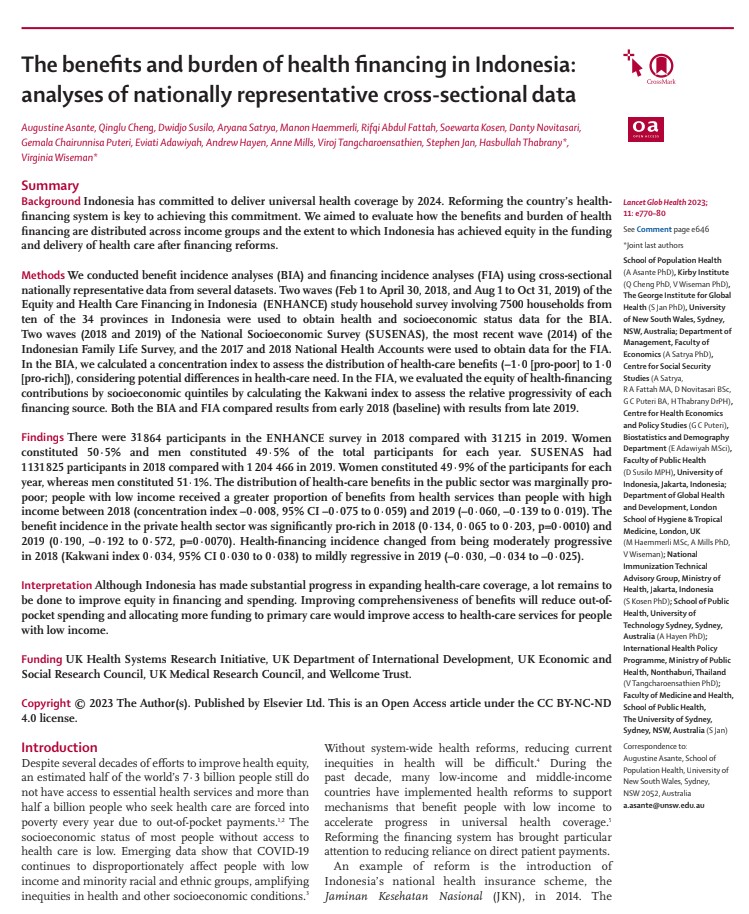
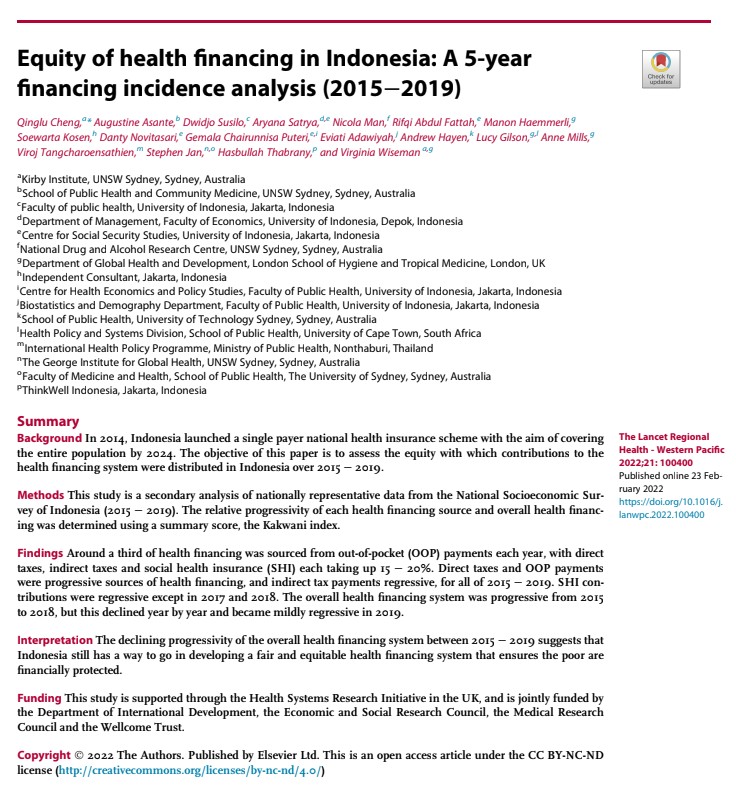
Indonesia has committed to deliver universal health coverage by 2024. Reforming the country’s health financing system is key to achieving this commitment. We aimed to evaluate how the benefits and . . .
Moving towards Universal Health Coverage (UHC) requires a sustainable and equitable health financing system. Health financing should not only seek to raise sufficient funds and use them efficiently but do . . .
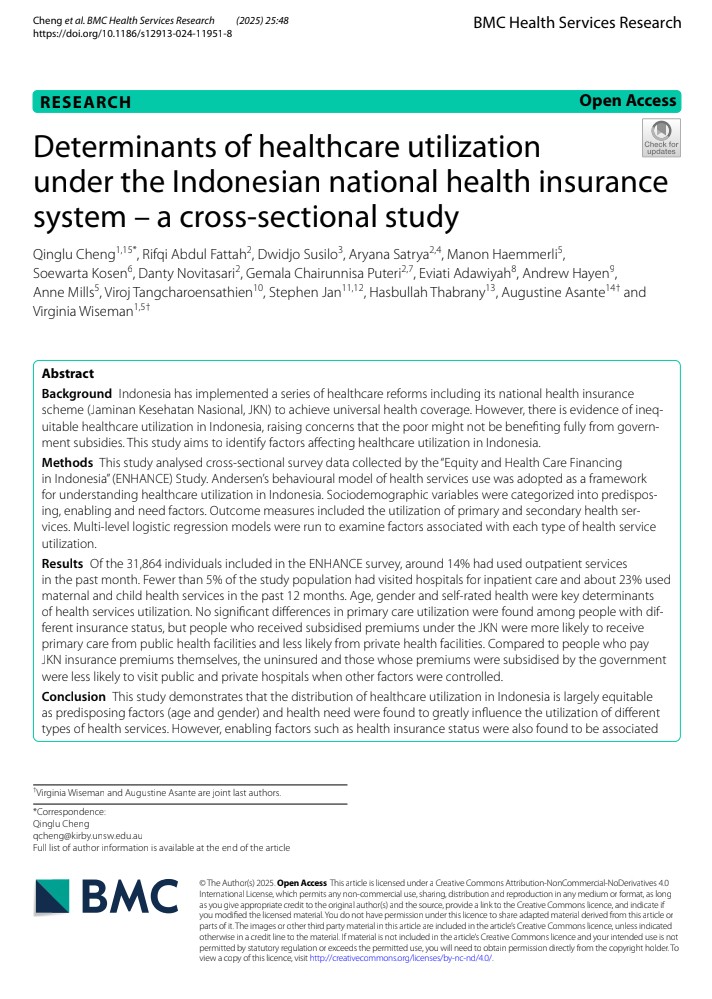
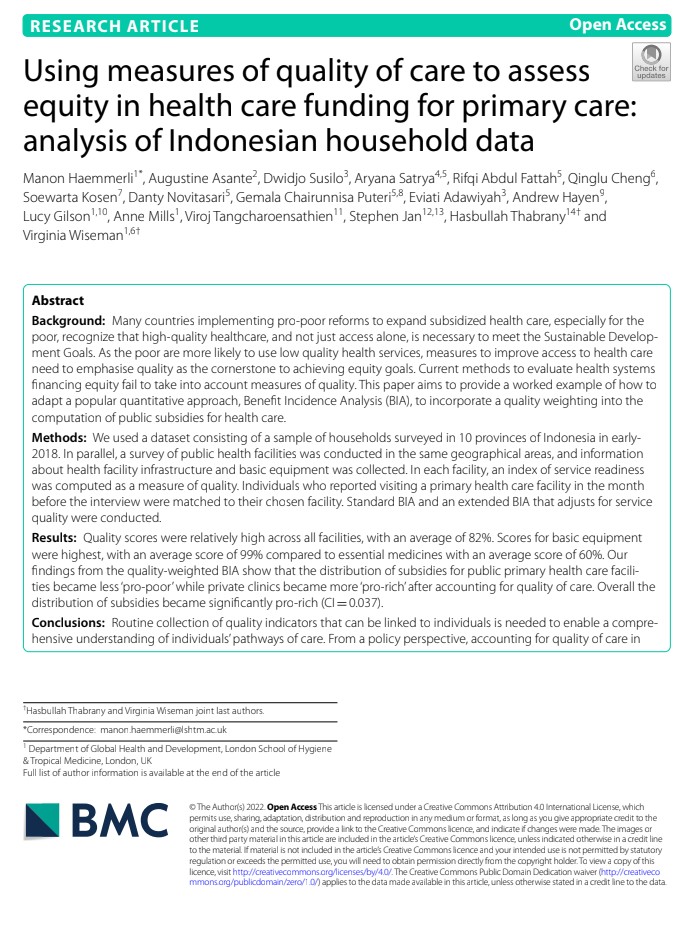
Many countries implementing pro-poor reforms to expand subsidized health care, especially for the poor, recognize that high-quality healthcare, and not just access alone, is necessary to meet the Sustainable Development . . .
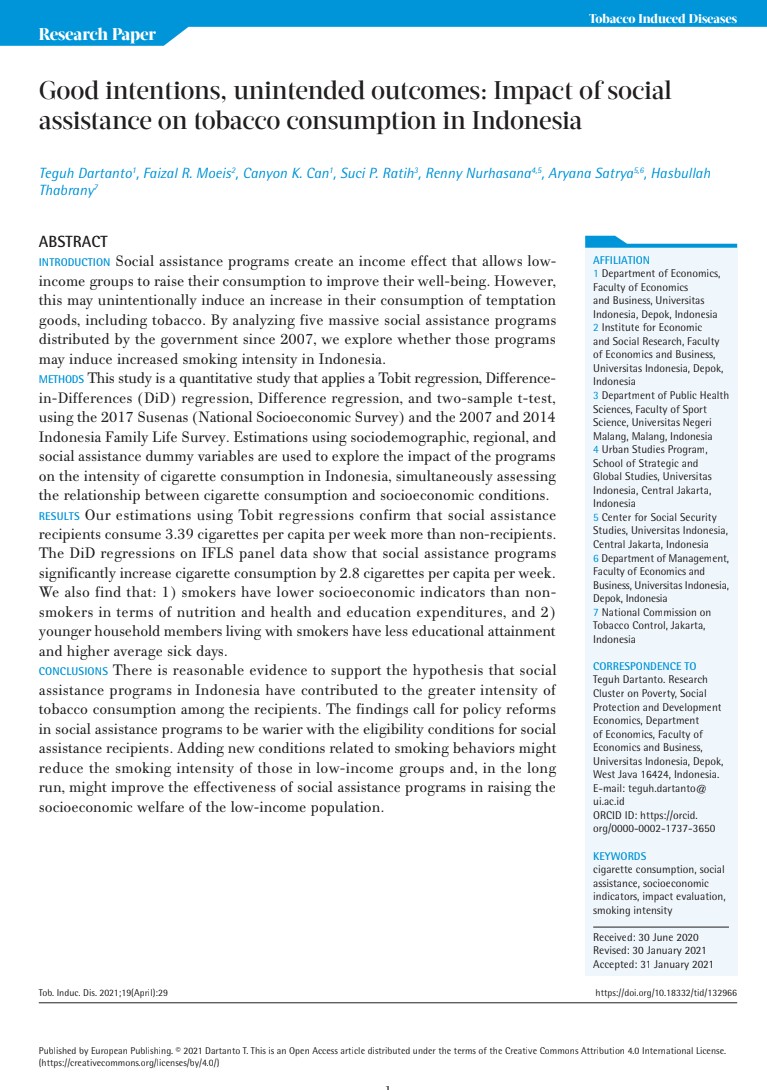
INTRODUCTION Social assistance programs create an income effect that allows low- income groups to raise their consumption to improve their well-being. However, this may unintentionally induce an increase in their . . .
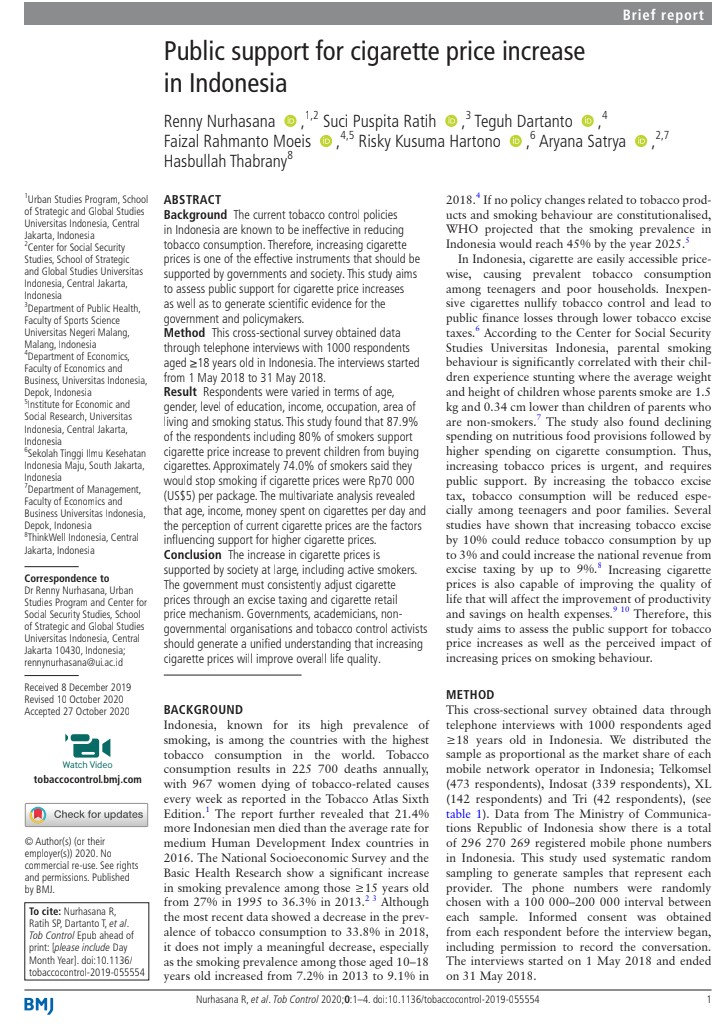
Indonesia, known for its high prevalence of smoking, is among the countries with the highest tobacco consumption in the world. Tobacco consumption results in 225 700 deaths annually, with 967 . . .