
The commitment to build a social security system calls upon a country to implement nationally appropriate social protection systems for reducing poverty and vulnerability. These social protections are needed to help improve the socioeconomic condition of its recipients through the improvement of health, education, and nutrition. Therefore, social assistance utilization is a means to enhance the recipient’s well-being. However, this may become problematic if the social assistance funds induces tobacco consumption. The misuse of social assistance for tobacco is damaging as recipients will fail to improve or even worsen their well-beings. In other words, social security programs may become ineffective.
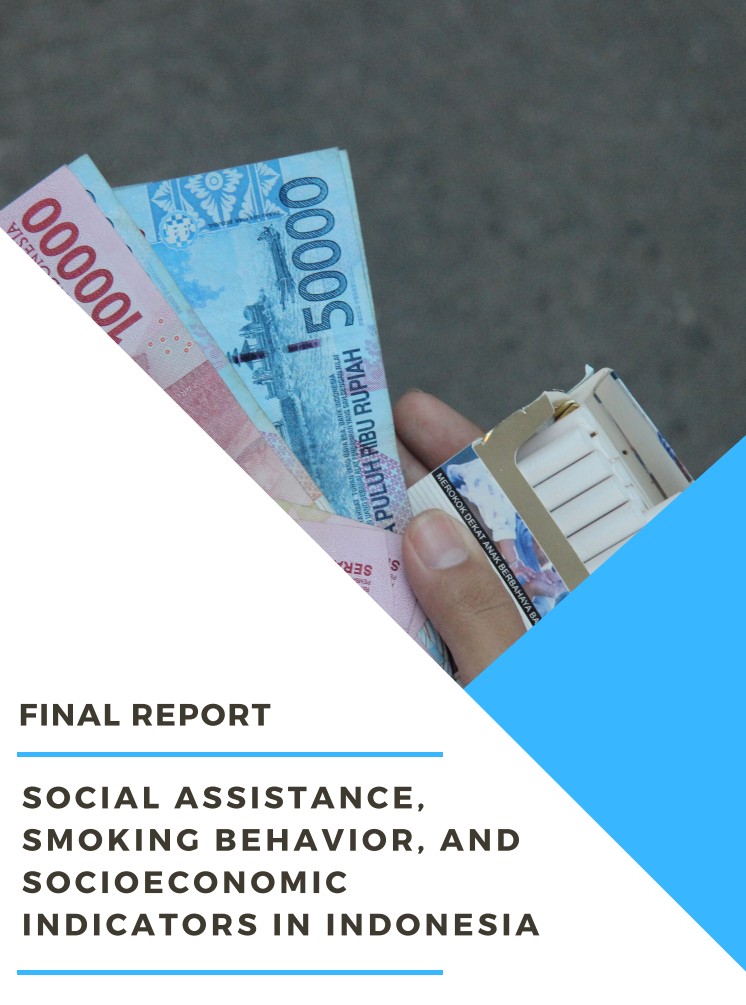
The report on “Social Assistance, Smoking Behavior, and Socioeconomic Indicators in Indonesia” is part of the contribution of the Pusat Kajian Jaminan Sosial Universitas Indonesia (Center for Social Security Studies Universitas Indonesia) to continually contribute for the improvement of eligibility of the social security system in Indonesia. This report utilizes multiple approaches that highlight social protection recipients to have tendencies to smoke and have higher smoking consumption (in terms of rupiah and cigarettes). These smokers tend to have lower socioeconomic indicators compared to non-smokers, thus may hamper the goal of social assistance and prolong the vicious cycle. Moreover, our estimations using the panel data of IFLS and Difference in Difference (DID) confirm that social assistance increases significantly the tobacco consumption.
I would thank to all participants of FGD 1, FGD 2 and TNP2K for their valuable and insightful comments for improving this report. I hope that these findings call for policy reforms in social assistance policy in which policymakers should improve the conditionalities of eligibility related to smoking behavior for social assistance’s recipients.